


Christopher Helali came to Iran as a journalist. He left with something harder to quantify — the testimony of a people who refused to break. In an exclusive interview with Mehr News Agency conducted in Tehran, the Iranian-American analyst spoke about the Iranian nation's resilience, anti-Iran propaganda, and Washington's most costly miscalculation yet.
Here is the full text of the interview:
You chose to come to Iran at one of the most critical moments in the country's modern history. What motivated you to come here, and what were the most interesting moments of your stay? What surprised or impressed you the most?
Well, first of all, I'm Iranian by blood, so this is my homeland and I love my homeland. And there are many famous quotes about one who doesn't love their homeland is an infidel, is somebody outside, is cast out. So, for me, I love my homeland. We can have disagreements about certain things, and there are many things that people are concerned about and critical of, and that's okay. That's part of having a society. But when your homeland is under attack by a foreign enemy, whether it's Alexander the Great or the Mongols or the US and the Zionists, we defend our homelands regardless of our differences, whether they be ethnic, religious, or political.
So, I came here at this critical time. I had finally had the opportunity to come as a member of the press corps, for my social media work and for our media company, DD Geopolitics, which has almost 1 million subscribers across all platforms. And we wanted to really come here and to see and to bring the truth to everybody. And one thing that impressed me the most was the resilience of the Iranian people, the dignity of the Iranian people, that in the midst of tens of thousands of bombardments, they continue on. They continue on without ceasing. Life goes on. Craftsmen do their work, people go to prayer, families get together, people go out on the streets, they go out to the rallies at night, they go out for strolls, they take their kids out. Life goes on.
And I think that shows a continuity in society. It also shows the strength of the society, unlike what the Western media says that Iranian society is on the brink of collapse, the government is on the brink of collapse. The proof is the opposite: Iranian society has proven far more resilient than they could ever have imagined. They [Western media] listen to too much propaganda from the Persian-language media in the West. They consume their own propaganda, and they didn't realize the strength of the Iranian people.
And one thing that I really have taken away from this trip is that Iran, as a civilized state, cannot be contained or easily put in a monolith. It's so diverse. We went from Tehran to Isfahan, from Isfahan all the way to Bandar Abbas, and to Minab. And we saw the diversity. We went to a Jewish synagogue, we went to an Armenian Christian church, and we went to a Sunni mosque in Bandar Abbas. The diversity, the people, the languages. Actually, we started the trip in Tabriz. So, we started in East Azarbaijan and came all the way down. [We saw] Azeri, Persian, Arabic, and other languages on the trip. It was amazing, really amazing. And I think that it's a testament to the mosaic of Iran, the diversity of Iran, and the great strength by which it draws all of this energy and potential from the people.
You mentioned that you have Persian blood. How does this personal connection to Iran shape your understanding of the conflict in ways that perhaps purely Western analysts cannot grasp?
I grew up with a father who participated in the Islamic Revolution. He was part of the early Revolutionary Guard, very much committed against the Shah, and did his service in the cause of the Revolution. He ended up studying abroad, met my mother, had me, and that was the end of his life in Iran.
Growing up in a family that really valued the principles of the Revolution, and solidarity with the Palestinian people, the resistance in Lebanon, the resistance against US imperialism and Zionism — all of these things helped to shape me as a person. On my mother's side, they were communists from Greece who also fought against Nazism, fascism, and imperialism — both British and American. As a high school student, I had [the picture of] Imam Khomeini in my room alongside Lenin, Mao and Marx. Basically, Red Shiism, Ali Shariati style.
This upbringing was a profound source of knowledge, inspiration, and ethical and moral values that framed my understanding of the world — of Iran, of the Global South, the global majority. The current situation can be easily understood by someone like me because I have been to Palestine, Lebanon, and Iraq. I fought in Syria. I've been to Yemen. I've seen what the Zionists do and what the Americans do. And now that I've been to Iran, we see firsthand the destroyed buildings, hospitals, and schools.
And because I lived in the United States — because I was born and raised there — I see what the US government does to pro-Palestine activists like myself, to people who support the Resistance, to people who have a critical opinion of US foreign policy. How they have repressed us, detained us, stolen our electronics, and gotten us fired from our jobs. I understand the personal cost of going against the empire, even from within the empire. Many Western analysts simply do not have that level of connection or understanding.
Western mainstream media have presented an anti-Iran narrative throughout this war. How does what you witnessed here on the ground compare to that coverage?
Well, for one thing, I have to say that Western media tries to portray Iran as if it's Afghanistan, you know, millennia ago or under the Taliban, that somehow everyone is repressed, women don't go to school, everyone's in a burqa, even though a burqa is not Iranian culture. [They say that in Iran] everyone is in a niqab, even though the niqab is not part of Iranian culture.
And they try to portray that somehow we are cave-dwelling, we are barbaric, we are uncultured, uncivilized, even though we are the source of civilization. We are the source, Mesopotamia and the early Persian peoples, all of the different empires, the Medes, all of the region was a source of civilization in their in the entire Middle East or South or Southwest Asia. So, in that way, they seem to negate that history and try to put all the blame on Islam, even though it was Islam that saved Plato, Socrates, and Aristotle from the fires, even though the Christians were burning them, and it helped to spur the Renaissance. It was Islam that in the Golden Age in Baghdad and other places like that, even in Cordoba in Spain.
So, when you look at when you look at all of the framing of this conflict, sadly, it is through a lens of Orientalism. They have this streak of portraying us as we are not. And so, when I came here, first and foremost, they say everybody has to have a mandatory hijab or chador. Most of the women I saw, especially in some parts of Tehran, were not like this. And nobody was enforcing it, nobody was causing problems. And I understand that there are still some issues on the society level, but things have become very relaxed, especially after two phases of war. So, I understand that things are changing.
The development here is unbelievable. One of the biggest malls in the region, the tallest bridge in West Asia. People would not believe that this is Tehran, that this is Iran. They assume it's mud huts, like we are living and and and having fires for our food. But that's not the case. So, what this trip has done is help to expose some of these narratives. I took video clips, myself and my colleague Wyatt from the Grayzone. We took video clips just on the street. People were shocked. They couldn't believe it. They said, "It can't be Iran. Is it AI or it's some other place?" [They thought that they were] Maybe in Morocco or maybe in Jordan. But it's Iran.
I want to show the truth about the Iranian people, Iranian culture, and Iranian history. And I think that's why it's so important for Iran to open its doors to foreign journalists who are supportive of the resistance in the sense that they support Iran's independence and sovereignty. They might not agree with Velayat-e Faqih or the way that the Islamic Republic runs, but if they support Iran's independence and sovereignty, we should welcome them. So, they can come and report the truth to foreign audiences instead of BBC Persian or Iran International and all of these other news agencies that only show propaganda and disinformation for their audiences. But Iran, as I've seen it on this trip, has completely debunked all of the myths that I was taught in school, and that we were consuming the media.
Regarding the peace talks — what are your thoughts? Do you believe a lasting ceasefire can be achieved?
The United States has imposed a blockade. A blockade under international law is an act of aggression. It's an act of war. So, we are still in a war situation.
Yes, they're not dropping bombs right now on Iran, but the blockade itself is an act of war. It's an act of economic aggression. It's an act of aggression between one sovereign state and another. If it were an embargo, it wouldn't be an act of war, but it's a blockade. And that, of course, raises the level of escalation to a whole new level.
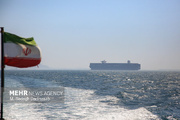
So, in fact, we are in a we are in a kind of cold war situation here. We are in an active war, but we are not necessarily [fighting a] firefight every day. We are in a situation where it could escalate at any moment. But the blockade stands, and Iran's control of the Strait of Hormuz stands. So, I think that we are in a showdown period, and we are the question is, who's going to blink first?
It's a type of brinkmanship, as we say, in political science and international relations theory. And this brinkmanship, the problem with it is that it's uncontrollable after some point. And we don't know what the United States will do, and we don't know what the Zionist regime is interested in doing. But we do know that their escalation now in Lebanon is a factor in all of this, because Iran has tied its negotiations and its ceasefire to Lebanon.
And right now, the Zionists are moving [against it]. We have two Lebanese journalists on our trip. One of them has had his uncle martyred. One of them has had three of his family houses, including his grandparents' house, bombed yesterday. And now his family has been displaced again. So, once we are experiencing that in our own group.
And I want people to recognize that this is tied to Iran's future. Because the Zionist regime's expansion, the Greater Israel project, is a direct threat against Iran. It's a threat against all of the people of the region.
So, I think that we are not going to have a peaceful situation until that is solved. And at this point, there is no indication that the Zionists will stop their aggression.
They want to continue into Lebanon, and even though they are getting hammered by Hezbollah, especially with these new drones, they will continue, it looks like, their advance.
What is your message to the American people about what their government is doing to Iran under the pretext of defending American interests?
My comment to the American people — a people that I am a part of, that I have been a part of since birth — is this: Is this how you want your tax dollars spent? Killing children in schools, destroying hospitals, destroying universities, destroying infrastructure?
Most Americans live paycheck to paycheck. There is no American dream anymore — it is an American nightmare. People cannot afford healthcare, childcare, or basic services. Many are on food stamps. Some have no aid at all because the Trump administration has cut these programs. And the little money they pay to the government, the government uses for a bloated military budget far exceeding [that of] Russia and China combined. For what purpose?
Is this how they want to liberate the Iranian people — by bombing them to the Stone Age, like Trump said? This is not America First. This is Israel First. And it is not in America's interest.
We were in Afghanistan from 2001. The Taliban is in power today. What did we achieve? Nothing. Iraq — nothing. Libya — nothing. Syria — still a disaster. In every place we were involved, did we succeed? No. So why continue on this path of nation-building and regime change when it has been unsuccessful everywhere?
My hope is that the American people will hold the government accountable in the midterm elections in November, and that more people will rise up and will challenge the government officials, challenge the Epstein class, hold them accountable for their crimes, not only their crimes in America, but their crimes in Iran and all over the world, because they are the ones responsible for Gaza's genocide. They are the ones responsible for the killing in Minab. They are the ones responsible for the starvation that we've seen in other parts of the world. And they are responsible for the human trafficking, pedophilia, and the human sacrifice that happens with this Epstein class. They must pay for this.
And that's my message is that we must rise up, and if we need a third American Revolution, let's do it.
Interviewed by Mohaddeseh Pakravan




Your Comment